
 Facebook
 X
X
 Pinterest
 Copy Link
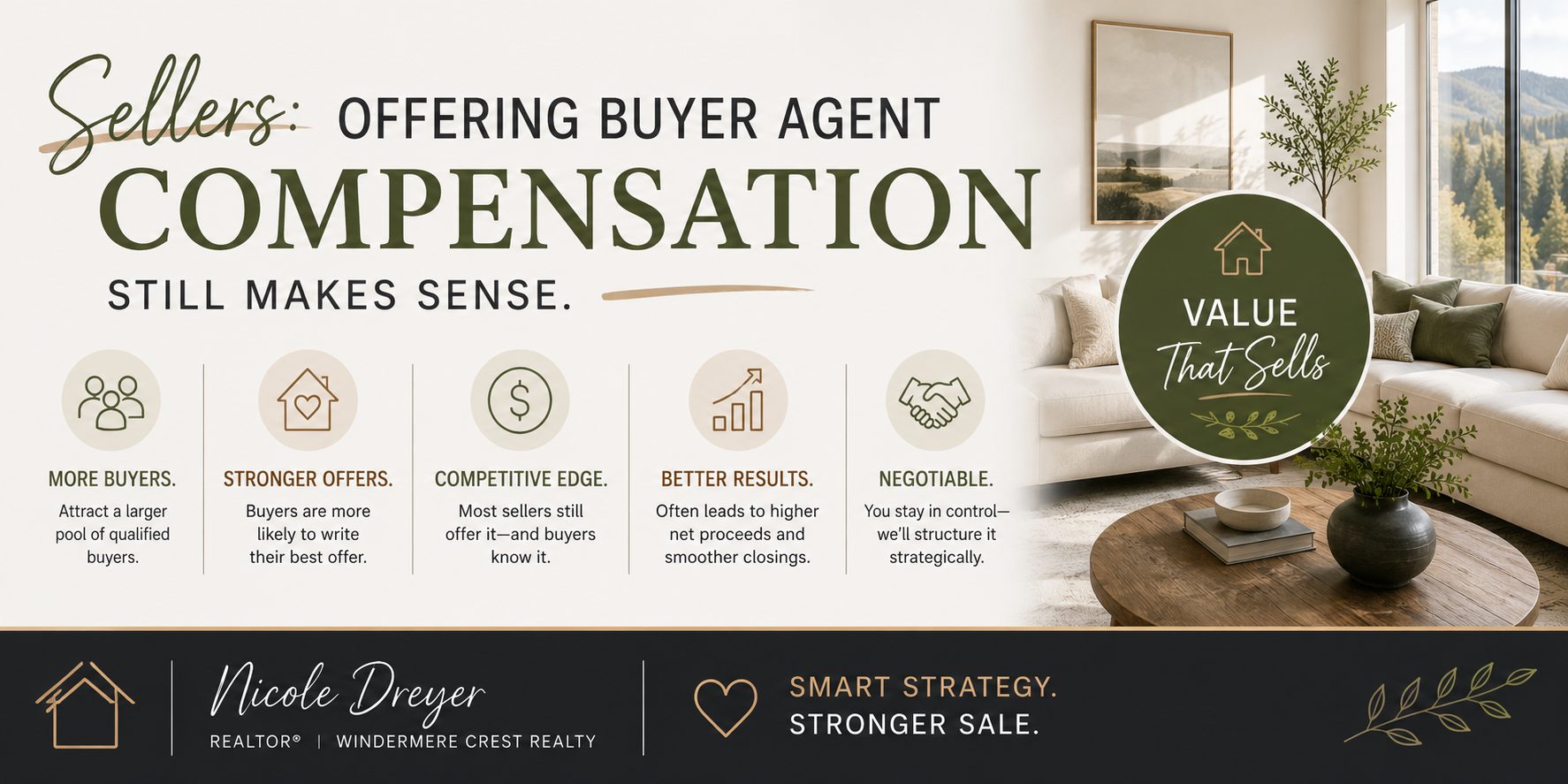
One of the biggest changes in real estate is that sellers are no longer able to advertise buyer agent compensation through the MLS. But that doesn’t mean offering it has gone away—or that sellers should automatically stop doing it.
In fact, many sellers are still choosing to offer buyer agent compensation, and there are some very practical reasons why.
Buyers Are Looking at the Bottom Line
When buyers are shopping for a home, they aren’t just looking at the purchase price. They are looking at the total cost of getting into the home, including their own closing costs and the cost of their representation.
If a buyer knows they may have to come out of pocket to pay their agent, that can affect which homes they choose to look at.
And let’s be honest—buyers have choices.
If two homes are similar and one seller is willing to contribute toward the buyer agent’s compensation while the other isn’t, the first home may look more attractive to a buyer who is trying to manage their cash.
That can mean some buyers simply steer away from homes where they believe the seller won’t help with the buyer agent fee.
It Still Matters When We Price Your Home
When I prepare a comparative market analysis for a seller, I’m looking at what buyers are actually going to see when they compare your home to the competition.
Buyer agent compensation can be one of those considerations.
If similar homes are offering compensation and yours isn’t, that can affect how buyers perceive the overall value of your property. It doesn’t necessarily mean your home won’t sell—but it can mean we need to consider that difference when determining the right price and negotiating strategy.
You Don’t Have to Offer It Blindly
Offering buyer agent compensation doesn’t mean you are agreeing to whatever a buyer’s agent asks.
It’s negotiable.
A seller can decide what they are comfortable offering, and compensation can also be addressed as part of the buyer’s offer.
For example, a buyer may request that the seller contribute a certain amount toward their agent’s compensation. You can accept it, negotiate it, or reject it—just like other terms of the offer.
The important thing is to understand that the buyer agent fee is now part of the overall negotiation, not something that has disappeared.
Why I Still Recommend Considering It
My job as your listing agent is to help you get the best possible result, not simply to avoid paying a buyer agent fee.
If offering compensation helps your home attract more buyers, creates stronger offers, or helps a buyer afford the transaction, it may make financial sense.
Sometimes paying a negotiated amount toward buyer representation can be outweighed by a better offer, a higher price, fewer concessions, or a smoother transaction.
That’s why I look at the entire deal, not just the commission.
The Bottom Line for Sellers
The rules have changed, but the strategy hasn’t become complicated.
Buyers still want to know what their total costs will be. Sellers still want their homes to attract the largest possible pool of qualified buyers.
That’s why buyer agent compensation is still something worth considering when selling your home.
It can be negotiated. It can be structured in different ways. And it should be evaluated alongside your home’s price, condition and competition.
The goal isn’t to pay more. The goal is to position your home so buyers see the value and want to write an offer.
